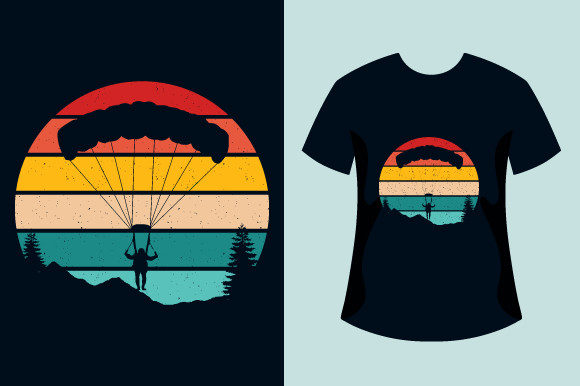
Retro Circle Skydiving T-Shirt Design – Embroidery Review
When a design lands on my screen with the promise of a vintage skydiving motif wrapped in a bold circle, my first thought isn’t about how it looks on a t-shirt. It’s about how it will live in thread, how the circular frame will hold up on a textured tote, and whether that retro energy translates into something customers actually want stitched onto a sweatshirt they’ll wear for years. That’s exactly the lens I used evaluating this Retro Circle Skydiving T-Shirt Design. And honestly, it made me pause in a good way.
First Look: Retro Vibe and Circular Composition
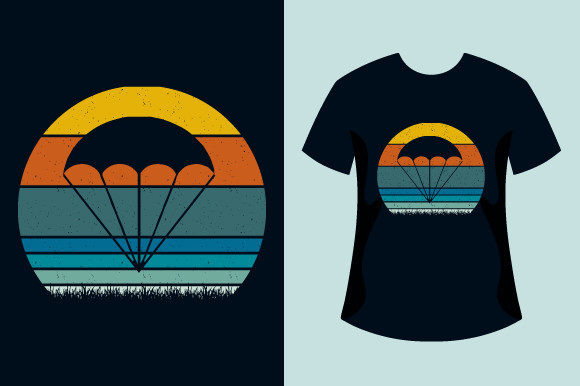
Right away, the mood is grounded in an adventurous, almost mid-century travel poster feel. The circular layout isn’t just a border; it pulls the eye inward, creating a badge-like confidence. For anyone who does custom apparel or handmade product work, a circle motif can be either a dream or a headache. On screen, this one reads clean and intentional. The skydiving theme feels specific without being niche to the point of unusable—think gift shop, not novelty aisle. The Retro Circle Skydiving T-Shirt Design carries a visual personality that belongs equally on a unisex hoodie for a boutique line and on a set of custom kitchen towels for a skydiving enthusiast’s housewarming gift. That kind of range is rare in themed graphics.
Where This Design Belongs in the Embroidery World
I spend a lot of my time thinking about where a design actually earns its keep. With this one, the answer kept expanding. I could see it as a focal point on a structured canvas tote bag, stitched in muted terracotta and cream threads for a boho market stall. I imagined it on the back of a lightweight denim jacket for a small shop’s summer collection, or scaled down carefully for a cap front—though that’s where caution comes in, which I’ll get to later. The circular badge format also makes it an instant candidate for embroidered patch production. A patch version of this retro skydiving scene would sell itself, especially with threaded edge stitching that echoes the circle. And because it’s not hyper-realistic, the design lends itself to machine embroidery design techniques like satin stitch outlines and open fill stitch textures without losing its identity.
Real Project Test: From Screen to Stitch on a Canvas Tote
I mentally walked through a very real scenario: a client who runs a small handmade Etsy shop needed a limited run of personalized tote bags for a local air show event. She wanted something that felt collectible but not childish. I pulled up this Retro Circle Skydiving T-Shirt Design as the core graphic and immediately started testing it in my head. First, I’d convert the vector file—thankfully it’s provided as a print-ready editable file, so the linework is clean, not a messy pixel trace. That matters hugely for digitizing because you’re not fighting jagged edges. I’d choose a medium-weight canvas stabilizer, hoop the bag face carefully, and run a stitch-out on scrap first. The circular composition would need a balanced underlay to prevent warping on the woven fabric. The retro vibes would shine if I used a slightly faded navy thread for outlines and a soft cream for fill areas, letting the circle frame feel like a vintage emblem. I could already hear the customer saying, “That looks exactly like the mockup, but better, because it’s stitched.”
How the Design Performs on Different Products
This is where practical embroidery experience really separates a decorative file from a business asset. Let’s break it down by product type, because the Retro Circle Skydiving T-Shirt Design doesn’t behave the same way everywhere.
- Sweatshirts and hoodies: A natural fit. Fleece holds the circle well if you use a water-soluble topper so stitches don’t sink. The retro badge look on a crewneck sweater screams boutique ready.
- T-shirts and thin knit apparel: Requires careful stabilizer choice and lower density digitizing. The circle must remain a circle, not turn into an oval after a wash. I’d test on a cotton jersey scrap first, no exceptions.
- Canvas tote bags: Excellent candidate. The flat, sturdy surface loves circular designs. Great for giftability.
- Caps and hats: Tread lightly. The curved surface can distort the circular frame, especially if the design is too wide for the front panel. I’d reduce the size and run it on the side panel or a flat unstructured cap instead.
- Baby clothes and nursery decor: The skydiving theme might be too specific for a baby onesie, but it could work beautifully on a nursery pillow cover if the buyer is an adventure-loving parent. The circle feels soft and complete, avoiding harsh edges.
- Aprons and kitchen towels: I’ve used badge-style designs on aprons before and they perform well because the fabric stays stable. This retro skydiving motif would make a quirky, memorable gift for someone who loves aviation.
- Patches: Ideal. Digitize with a dense satin border around the circle and a light fill inside, then apply to jackets or backpacks. The patch format elevates the handmade product feel.
What to Watch When Translating This Vector to Thread
The description mentions it’s a 100 vector file, print ready and editable. That’s excellent news for embroidery digitizers because it means clean nodes, not a rasterized mess. But vector doesn’t automatically equal stitch-ready. Here’s what I’d inspect before touching a single needle. Circular designs often contain thin decorative strokes that look great in ink but disappear or break under stitch. I’d check for any tiny text or fine line elements that could close up when scaled down. If the design includes lettering inside the circle, I’d bump the minimum stitch size and probably switch to a simple running stitch for the smallest details. Stitch density in the circle border needs to be firm but not so heavy that it puckers lightweight fabric. A medium satin stitch for the main outline and an open fill stitch for background areas would keep the retro mood without making the final product feel stiff.
Thread color choice amplifies the vintage effect. I’d stay away from pure black and pure white—opt for antique gold, dusty blue, burnt orange, and off-white. Do a test stitch on both light and dark fabric because the same design can look completely different once the thread contrasts shift. I always print a grayscale mockup first to gauge how the values will read for commercial embroidery clients.
Hoop Size, Fabric Texture, and Tricky Surfaces
The circular shape means hoop alignment is less forgiving than rectangular or free-flowing designs. If you’re off by even a degree, it shows. Always mark the fabric center and do a basting stitch outline for placement guidance. For textured fabrics like terry cloth or slub linen, the circle’s edges may catch and distort; a heavy-weight stabilizer and a topping film solve most of that. On stretchy fabric, use a fusible mesh cutaway and don’t pull the material while hooping. And never, ever skip the test run on a scrap that matches the final garment’s weight and stretch. A small hoop size like 4x4 inches might compress the detail into an unreadable knot. I’d keep the design at least 5 inches wide for any product where you want clear definition.
Licensing and File Specifics: What You Actually Get
This Retro Circle Skydiving T-Shirt Design falls under the Print Templates and Graphics categories. The seller says you can download, edit, and use it in your print item without problem. That strongly points to a commercial-friendly vector asset. However, as an embroidery reviewer who’s also a small business owner, I urge you to confirm the license before you digitize and sell finished products. Is it for personal use only? Can you sell physical items with the stitched design? Can you distribute the embroidery file itself? These answers aren’t in the short product description, so reach out to the designer or read the shop’s license terms. Don’t assume unlimited commercial embroidery rights just because it’s editable. My rule: clarity protects your Etsy seller account and your reputation.
Designer’s Pre-Flight Checklist Before Stitching for Sale
If I were adding this to my project library for client work or boutique merchandise, I’d run through a very specific list. I’m sharing it because it’s saved me more times than I can count.
- Digitize from the original vector, not a screenshot. Even minor rescaling in a raster version introduces artifacts that bleed into stitch generation.
- Test satin stitch width. If the circle border is under 1.5 mm wide on screen, it may need thickening in the digitized version or a switch to a triple running stitch.
- Check thread color codes against my inventory. I mock up the design in three palettes: retro bright, muted, and monochromatic. This helps customers visualize options for personalized gift orders.
- Stitch a wash test. A sweatshirt with the design goes through a cold wash and tumble dry low cycle. If the circle warps or thread breaks, I revisit underlay stitching.
- Create a small printable mockup card. Even though this is for embroidery, buyers still love seeing a digital preview. The vector source makes it easy to include in product listings.
- Confirm design file compatibility. The source is a vector, not a ready-to-load embroidery file. You’ll need to convert it to your machine format. Make sure you have the software and skill to do that without losing the retro character.
Visual Appeal, Customer Trust, and the Hidden Value of a Good Circle
Here’s a perspective many reviewers skip: the psychology of a circular design on a stitched product. A circular badge conveys solidity, nostalgia, and a sense of belonging. Buyers subconsciously trust it more than an amorphous floating graphic. The Retro Circle Skydiving T-Shirt Design leverages that perfectly. When a customer unboxes a tote or unfolds a sweatshirt with this embroidered emblem, they feel they’re holding something crafted, not just printed. That’s the gap between a quick iron-on and a premium handmade product. And that gap directly affects what you can charge. For a boutique shop owner, this design can transform a blank hoodie into a $65 item instead of a $25 basic. The retro skydiving theme has a subculture appeal that also makes it giftable and collectible, especially for outdoor event merch.
Is This Design Ready for Client Orders and Shop Shelves?
From what I can see as an experienced embroidery product reviewer, the Retro Circle Skydiving T-Shirt Design is one of those rare print templates that translates beautifully to thread when handled correctly. Its circular badge format, vintage mood, and clean editable vector origin make it a strong candidate for custom apparel, tote bag design, sweatshirt embroidery, and even baby embroidery or nursery pieces if you tweak the theme presentation. You must be cautious with tiny details, curved cap surfaces, and small hoop constraints, but that’s true of any badge-style graphic. The actual design, once digitized with care, rewards you with a finished product that looks intentional, professional, and expensive—exactly the feeling I want to deliver to paying customers.
I’d keep this one in my permanent library for craft fair season, last-minute personalized gift orders, and boutique branding. Just digitize thoughtfully, test on real fabric, and know your license. The retro circle skydiving motif does the heavy lifting; your stitching makes it fly.