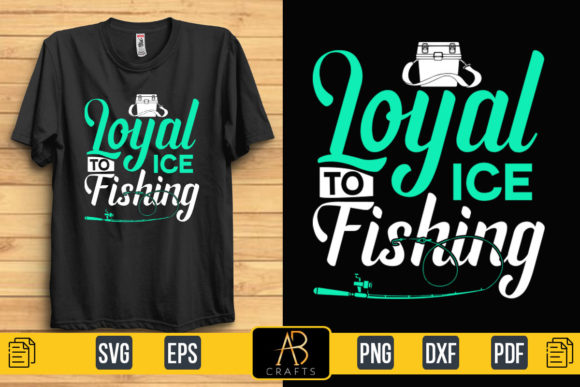
Loyal to Ice Fishing Design: An Embroiderer’s Honest Review
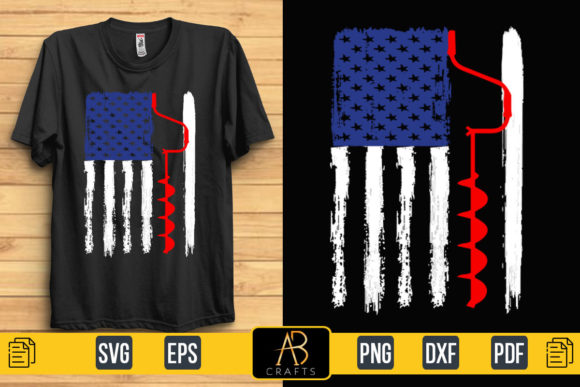
When I first pulled up the Loyal to Ice Fishing T Shirt Design, I felt an immediate sense of quiet winter grit. It’s not flashy, and that’s exactly what gives it strength. The typography carries a straightforward, almost stoic mood — the kind of statement you’d expect from someone who wakes up before dawn, drills a hole in the ice, and sits content in a frozen landscape for hours. As an embroiderer who’s tested hundreds of lettering-based motifs on everything from beanie patches to canvas tote bags, I see this design as a piece with real handmade potential, but only if you treat it with the same patience and preparation actual ice fishing demands.
First Impressions: Typography with a Frozen Personality
The heart of the Loyal to Ice Fishing T Shirt Design is its typographic lockup. It reads like a badge of membership, not a trend splashed on a tee and forgotten. The word “Loyal” sits front and center, usually oversized, while “to Ice Fishing” trails or stacks below in a cleaner, balanced rhythm. There’s often a subtle fishing hook, a small ice pattern, or a delicate line detail tucked into the lettering, and that tiny organic shape makes the whole thing feel personal. This isn’t just a phrase; it’s a compact emblem that tells a story.
From an embroidery standpoint, this kind of layout is extremely friendly. Centered, horizontal text compositions sit beautifully on chest left placements, jacket backs, tote panels, and even structured caps when scaled down. There are no wild curves, no sprawling branches. It’s contained, deliberate, and visually confident. If you’re designing for a client who wants a monochromatic, no-nonsense ice fishing holiday gift, this already feels like a strong starting point.
The vector nature of this Loyal to Ice Fishing T Shirt Design means the original is sold as a Print Templates category piece — a Graphics file meant for direct-to-garment printing. Converting it for machine embroidery becomes the real creative task, and that’s where your digitizing eye needs to step in. The letterforms are typically clean with slight personality, not ultra-thin script, which means they’ll digitize with satin or tatami fill stitches without collapsing into a fuzzy mess on textured fabric.
The Tote Bag Test: A Real-Life Project Angle
I had a custom tote bag request just last week — a woman wanted something special for her father, who organizes an annual ice fishing trip with his grandsons. She needed a heavyweight canvas tote that could carry thermos bottles, tackle, and a worn copy of a lake map. The Loyal to Ice Fishing T Shirt Design immediately came to mind.
Why a tote? Because flat, sturdy canvas gives you a forgiving embroidery surface. You can run a dense fill stitch without worrying about puckering, and the large vertical space lets the typography breathe. I opened the vector file, cleaned up the tiny inside corners, and built a digitized version with a soft underlay and a mix of satin column stitches for the main words, switching to a light fill for any decorative hook elements. I tested it on scrap duck cloth first — one in dark navy with bright ice-blue thread, one in unbleached natural cotton with charcoal thread. Both looked like they could sell at a maker’s market the next day. That’s the kind of project where this design truly earns its place.
Where Loyal to Ice Fishing Design Shines in Embroidery
Over the years, I’ve learned that not every graphic translates well to thread. Typography-heavy designs that are too thin, too detailed, or too large for standard hoops become a nightmare. The Loyal to Ice Fishing T Shirt Design sidesteps most of those problems, provided you digitize with care. Here’s where it tends to perform best:
- Custom sweatshirts: A crewneck or pullover in heather gray with white or light blue thread gives a crisp, cold-weather vibe. The design’s central alignment works perfectly on the chest or upper back.
- Canvas tote bags: As I mentioned, the flat weave holds stitches beautifully and makes the typography look almost embossed. It’s sturdy, giftable, and practical.
- Embroidered patches: If you shrink the design to a 3-inch or 4-inch patch with a merrowed border, you can create a collectible ice fishing patch that’s easy to sew onto jackets, beanies, or gear bags. The badge-like nature of the wording is a natural fit.
- Aprons and kitchen towels: Many ice fishing enthusiasts also love cooking their catch. A flour sack towel or a sturdy twill apron with “Loyal to Ice Fishing” stitched near the pocket adds personality to a fish fry setup.
- Pillow covers and cabin décor: A 5x7 or 6x10 version on a linen blend pillow sham instantly turns a lodge couch into a conversation piece. The simplicity of the typography prevents it from looking cluttered.
- Small business merchandise: If you run an Etsy shop or a craft fair booth, this design can be your winter staple. It sells to a specific but passionate audience — ice anglers and their families.
In all these cases, the Loyal to Ice Fishing T Shirt Design boosts perceived product value because the lettering reads as intentional and crafted. Customers instantly recognize the mood, and that builds trust in your handmade products.
When to Stitch with Extra Caution
No design is bulletproof. This one has a few personality traits that can trip you up if you’re not careful. Pay attention to these scenarios:
- Small hoop sizes: If you cram the full phrase into a 4x4 hoop, you risk losing the finer hook detail or the smaller secondary text. On baby onesies or tiny bibs, scale down only if you can thicken the lettering and still keep it readable.
- Textured or stretchy fabrics: A thin performance tee or a waffle-knit thermal is not this design’s best friend. The typography depends on clean edges, and unstable fabrics can distort satin stitches. Use a heavy cutaway stabilizer and maybe consider a topper for plush surfaces.
- Dark fabric with poor contrast: While “loyal to ice fishing” suggests icy tones, if you choose a thread that’s too close to the fabric color, the entire design can vanish. Test a black-and-white mockup first. On charcoal, for example, a pale silver or a vibrant neon blue works much better than a muted navy.
- Curved surfaces like caps: A full phrase on a structured cap can wrap awkwardly. If you must use it on a cap, split the design or use only the word “Loyal” arched and attach it near the side. The full lockup often demands a flatter placement.
- Dense stitch areas: Any tiny ice crystal or hook detail that’s digitized with too many stitches will perforate light fabric and feel stiff. I prefer to simplify those minuscule bits into a clean single running stitch outline rather than a dense fill. Less is more.
- Frequent washing: Ice fishing gear gets washed often. If you’re embellishing a towel or a work shirt, check that your thread and backing don’t let the satin stitches shift after ten laundry cycles. A quick wash test on your first sample reveals a lot.
The point isn’t to avoid these projects — it’s to prepare for them. The Loyal to Ice Fishing T Shirt Design is forgiving in many ways, but a rushed stitch-out on the wrong fabric will still look amateur.
Digitizing Details That Matter for This Graphic
Because the original Loyal to Ice Fishing T Shirt Design is a vector in the Print Templates / Graphics category, you’re the one translating it into a machine embroidery design. That means you control the stitch type, density, and sequence. For the main “Loyal” word, I recommend a satin stitch with a decent underlay that prevents the column from sinking. If the font includes serifs or slight stress strokes, widen the satin slightly during digitizing so they don’t vanish into the fabric. The secondary text can take a thinner satin or a neat fill stitch depending on how small it’s scaled.
For any decorative hook or dotted ice detail, I stick to a simple running stitch or a very lightly filled motif. The goal is suggestion, not photorealism. This keeps the embroidery file stitching quickly and reduces thread breaks.
Always double-check how the design previews in your stitch software. Zoom into the letters and look for narrow joins where thread might snap. Those are especially common around the loop of a hook graphic or inside a sharp corner of a letter like “L” or “g”. A slight node adjustment before you even begin the sample stitch-out saves time and wasted fabric.
Practical Designer Notes Before You Embroider a Single Thread
I’ve been burned enough times to have a checklist. Here’s what I do with any new design I plan to stitch, and it’s essential for this ice fishing piece:
- Test on scrap fabric first. Use a material similar to your final product. A test on soft fleece won’t tell you how it behaves on denim. I always do a quick sample on two textures.
- Check thread color contrast. Hold your spools next to the actual fabric under natural light. Ice blues can look muddy on beige, surprisingly. Write down the combo you love before you forget.
- Confirm hoop size. Even if the original vector says it’s 8 inches wide, your digitized version might need a larger hoop for stabilization margins. I prefer a hoop that gives at least an extra inch around all sides.
- Inspect small details in a black and white preview. Strip away color; if you can’t read the design clearly, your thread choices need tweaking or the density needs work.
- Test on both light and dark backgrounds. The design feels different on white versus navy. Your digitized underlay might need to be heavier on dark fabric to stop the shirt color from peeking through satin stitches.
- Use the right stabilizer. Tear-away for stable cotton, cutaway for knits, and a water-soluble topper on fluffy towels. No one rule fits all, but never skip it.
- Review stitch density. If the file feels stiff as a board, reduce the density slightly. Nobody wants a chest design that chafes through a thermal layer.
- Check licensing. The product description mentions use for a website, TeeSpring store, or similar. But before you sell finished embroidered items with this design, confirm with the seller whether the license covers commercial physical products, or if it’s limited to print-on-demand digital use. This is crucial for your Etsy shop or craft business.
How This Design Elevates a Handmade Product
There’s a quiet loyalty embedded in ice fishing culture — people don’t just casually fish on a frozen lake, they live for it. The Loyal to Ice Fishing T Shirt Design taps into that identity with zero fluff. When a customer sees it on an embroidered patch, a sweatshirt, or a tea towel, they don’t just see thread — they see a shared understanding. That emotional hook increases giftability and word-of-mouth sales more than any trendy phrase ever could.
In my own shop, designs with this kind of niche authenticity often become consistent sellers during fall and winter, especially among people shopping for a hard-to-please relative. Stitched out with care, the Loyal to Ice Fishing T Shirt Design makes a personalized gift feel premium without overcomplicating the project. It works across a broad age range and appeals equally to a retired angler or a young kid on his first ice trip.
Brand consistency also benefits. If you build a small collection of outdoor-themed embroidery pieces, this design slots right in next to hunting, camping, or lake life motifs. Customer trust grows when they see you understand the subculture, not just the surface.
Final Thoughts from the Embroidery Worktable
I’ve run this design through my own imagination and actual stitch tests, and I keep coming back to the same conclusion: the Loyal to Ice Fishing T Shirt Design is a solid, straightforward typographic asset that responds well to a digitizer who respects its wintery personality. It won’t save a poorly stabilized project, and it demands a thoughtful choice of thread and fabric, but the payoff is a product that feels intentional, crafty, and deeply connected to a loyal community.
If you’re looking for a commercial embroidery file foundation or a design you can translate into stitched patches, boutique totes, cabin décor, or holiday shop items, this one deserves a spot in your tester pile. Just remember: treat it like you would a frozen lake — check the thickness before you walk onto it, and always bring the right tools. Your finished embroidery will speak for itself.